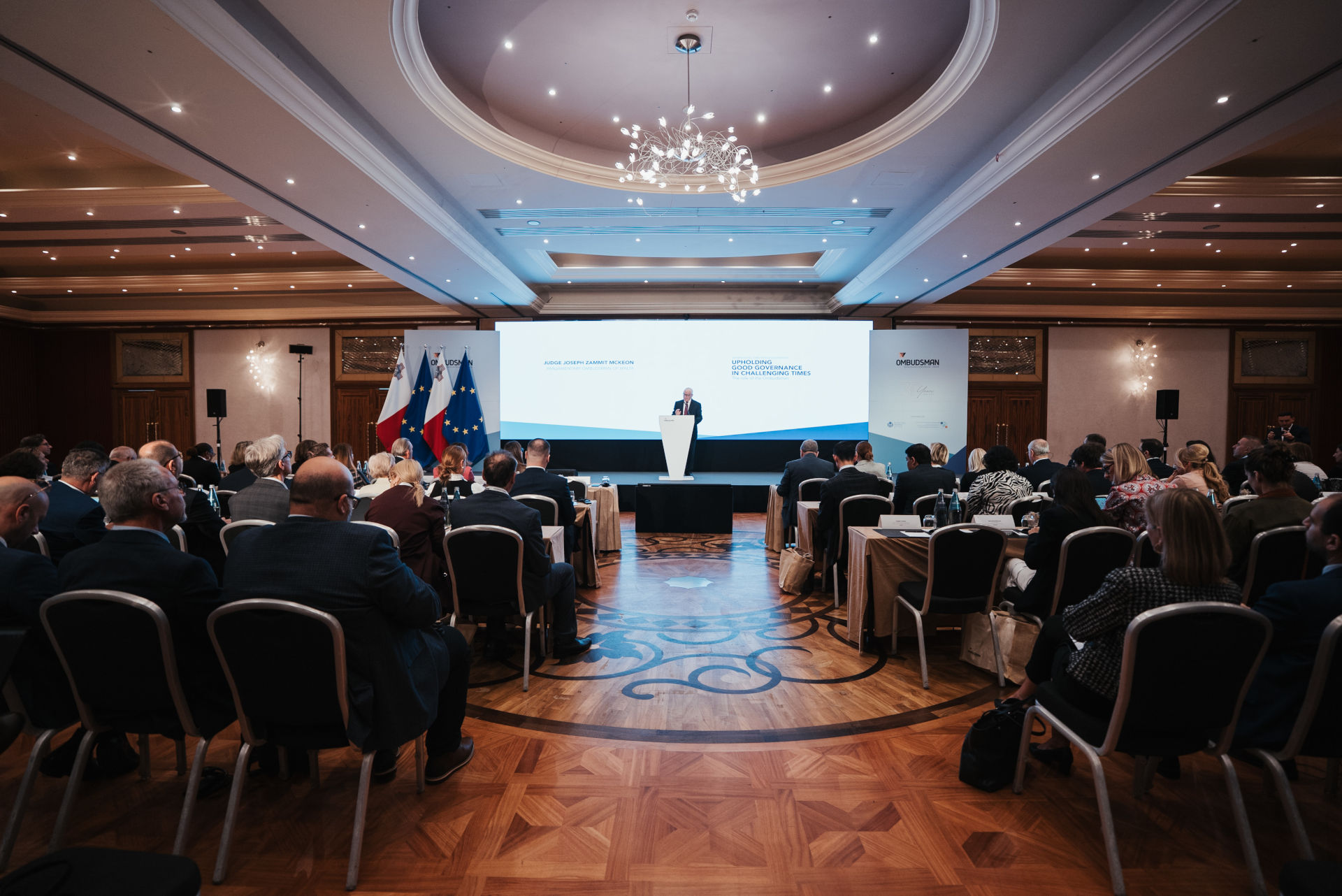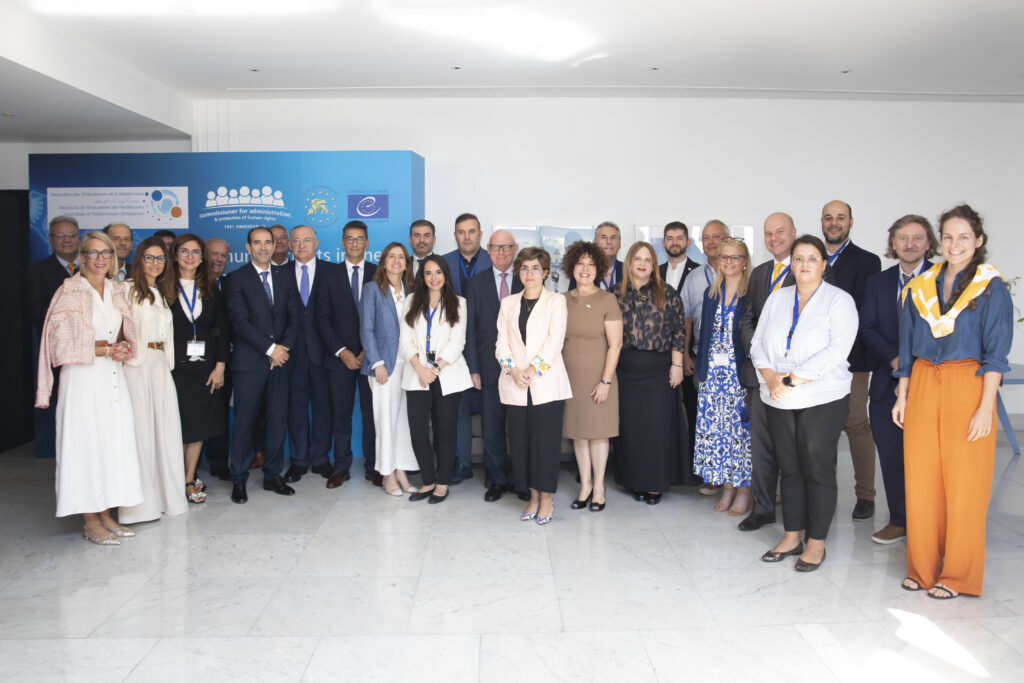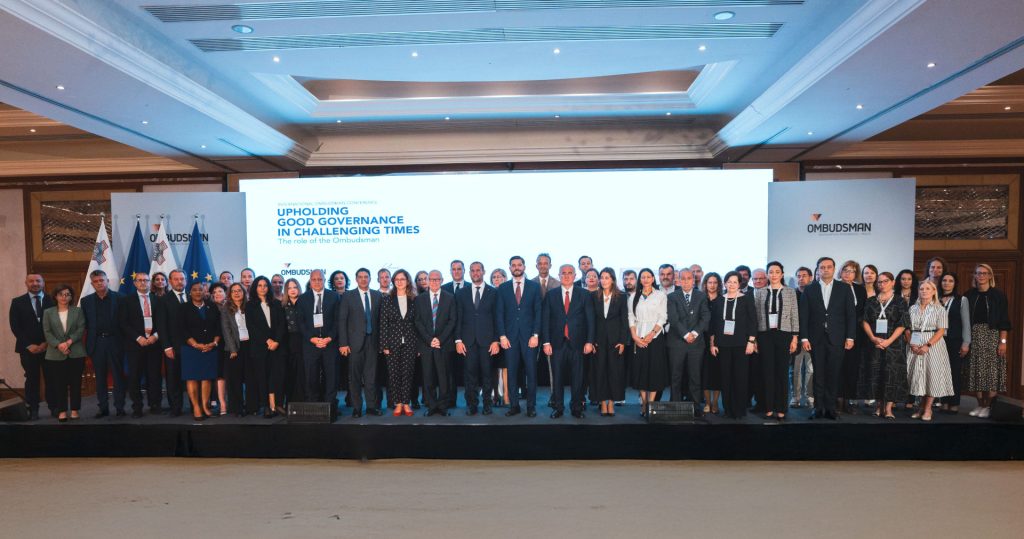
The Office of the Ombudsman of Malta celebrated its 30th Anniversary with an international conference held on 15–16 October 2025 under the theme “Upholding Good Governance in Challenging Times: The Role of the Ombudsman.” The event was organised in close collaboration with the Association of Mediterranean Ombudsmen (AOM) and brought together Ombudsmen, human rights defenders, and representatives of accountability institutions from Europe, the Mediterranean, and beyond.
This two-day conference also hosted the General Assembly of the AOM, reinforcing Malta’s commitment to regional cooperation and shared standards of good governance.
Celebrating a milestone in oversight and democracy
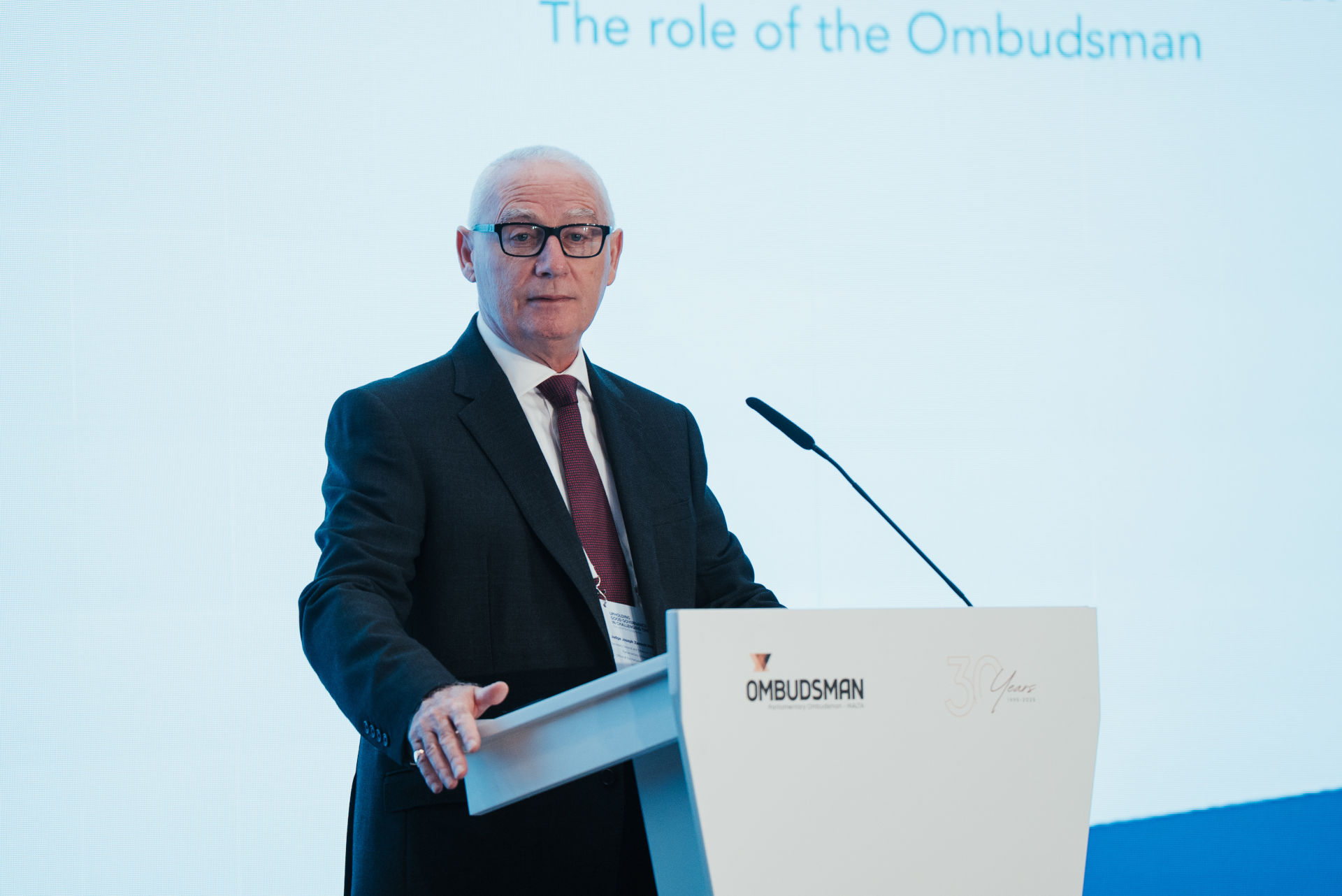
In his opening address, Parliamentary Ombudsman of Malta, Judge Joseph Zammit McKeon, reflected on the Office’s journey from its establishment in 1995 to its strengthened constitutional role today. He reaffirmed the Ombudsman as a “guardian of fairness, trust, and justice for every person,” highlighting its evolution into a respected constitutional authority.
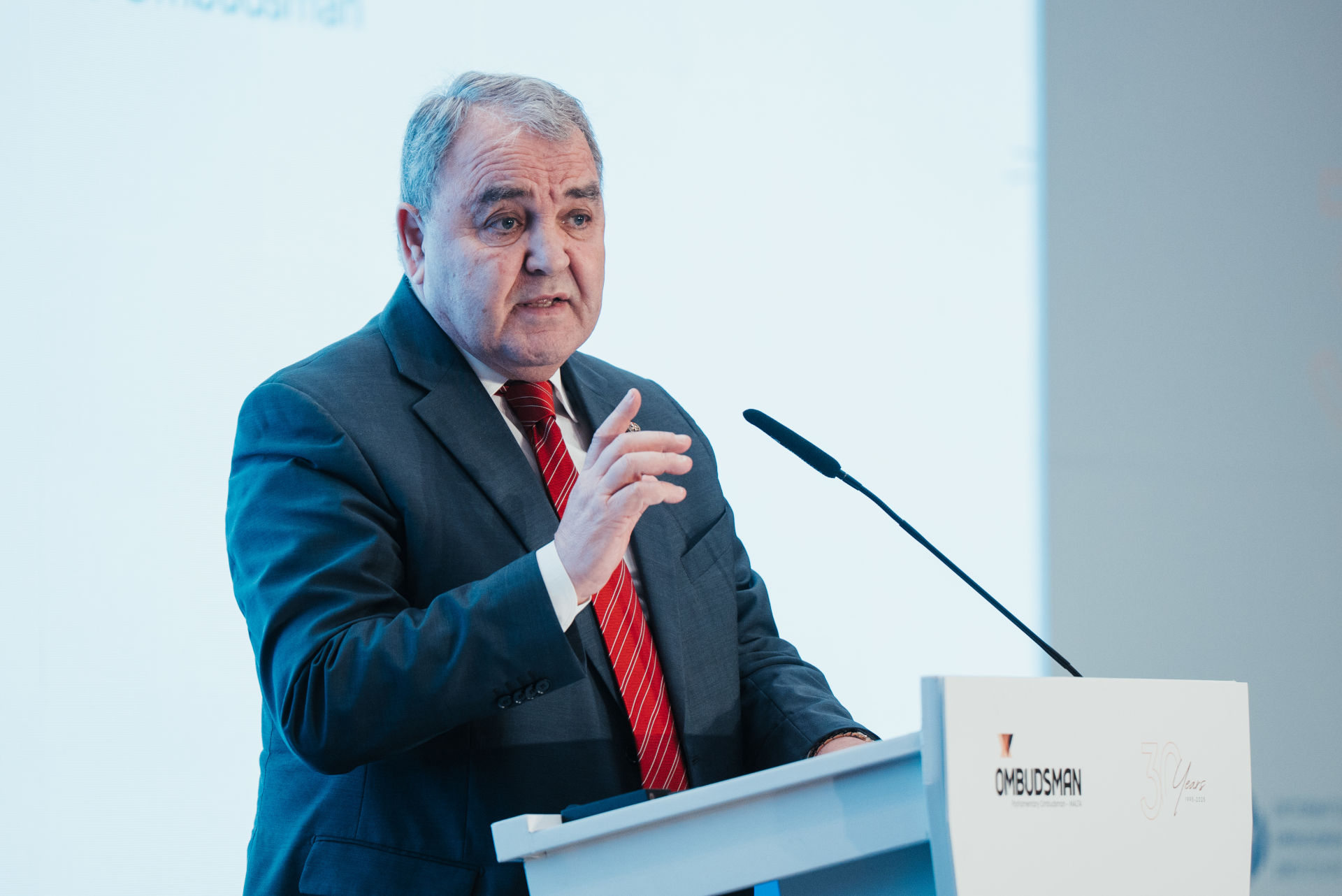
The Hon. Anglu Farrugia, Speaker of the House of Representatives, reiterated Parliament’s duty to defend the Office’s independence and to ensure proper follow-up on its recommendations.
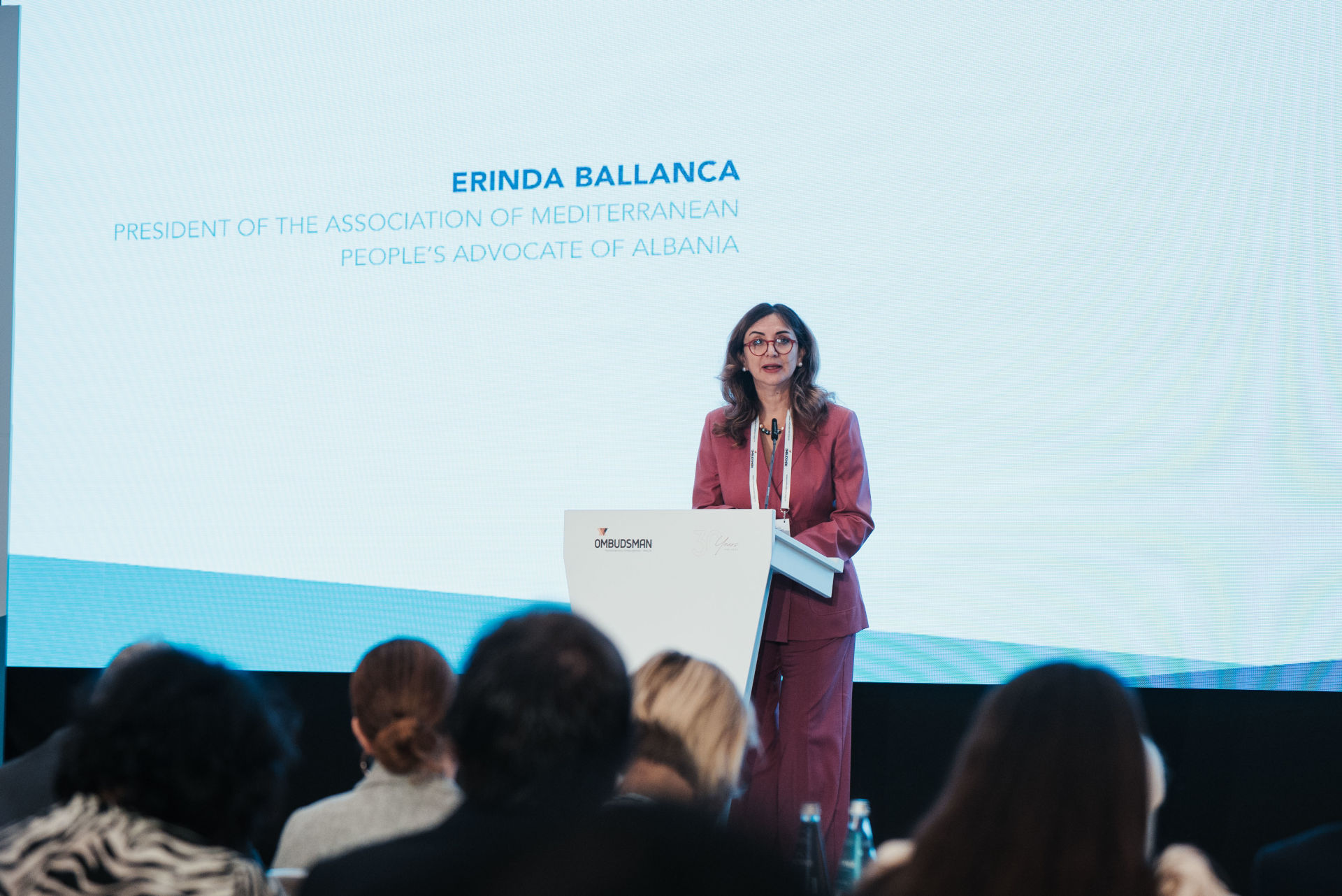
A contribution was delivered by Ms Erinda Ballanca, People’s Advocate of Albania and President of the Association of Mediterranean Ombudsmen (AOM). She placed good administration firmly within the sphere of fundamental rights rather than administrative convenience. Drawing on international assessments of rule-of-law trends, she noted that more than three-quarters of countries examined since 2016 have experienced a weakening of checks and balances. This, she warned, increases risks of institutional stagnation and undermines public confidence.
She highlighted the Venice Commission’s Rule of Law Checklist as a practical benchmark for evaluating legality, certainty, equality, and access to justice, while underlining that legal principles must be implemented in practice to have meaning. Her intervention encouraged Ombudsman institutions to apply the same standards to themselves, emphasising responsibility, measurable outcomes, and the importance of integrity and timeliness. She noted that moving from principles to concrete results is essential to restoring the levels of trust on which democratic systems depend.
Themes and discussions
Four thematic panels explored the Ombudsman’s mission in a changing governance environment.
Panel 1: Building people’s trust
Speakers discussed how trust remains the basis of democracy. They stressed that independence, impartiality, and accessibility are central to ensuring public confidence in institutions, particularly in times of political and social uncertainty.
Panel 2: Safeguarding fundamental rights
The panel examined the Ombudsman’s role in protecting persons in vulnerable situations, with contributions highlighting challenges linked to conflict, migration, climate transitions, and digitalisation.
Panel 3: Advancing ethical governance
Speakers from Cyprus, Malta, Finland, Azerbaijan, and the Czech Republic emphasised that integrity, transparency, and accountability must remain essential elements of public administration. Discussions underlined the role of the Ombudsman in strengthening ethical governance through oversight and guidance.
Panel 4: Embracing technological innovation
Experts and Ombudsmen from Croatia, Estonia, Barcelona, and the Council of Europe addressed both the opportunities and risks associated with AI and digitalisation. They called for oversight structures that ensure technology respects fairness, dignity, and human rights.
Closing reflections
Professor Anne Marie Thake, Conference Rapporteur, delivered a comprehensive summary noting that the sessions reaffirmed the Ombudsman’s essential role as a defender of democratic values, accountability, and human dignity.
The closing ceremony, attended by Prime Minister Robert Abela and Leader of the Opposition Alex Borg, highlighted broad recognition of the Ombudsman as a vital mechanism of democratic oversight and an important element of good governance in Malta.
In his concluding remarks, Judge Zammit McKeon stressed that “good governance must be translated into practice,” and called for transparency, accountability, participation, and equity to guide public administration.
Strengthening regional cooperation
A central component of the event was the General Assembly of the Association of Mediterranean Ombudsmen (AOM). The Assembly provided an opportunity for members to review ongoing programmes and reinforce joint commitments to human rights, good governance, and institutional cooperation across the Mediterranean region. The presence of the AOM at this anniversary conference underscored the importance of Malta’s role within regional Ombudsman networks.
Looking forward
The Malta conference reaffirmed the resilience and relevance of Ombudsman institutions in addressing the challenges of modern public administration, from ethical governance to technological transformation. It also highlighted the importance of collaboration — with the AOM, IOI, and other international partners — in strengthening shared values across borders.
The Office of the Ombudsman expressed its appreciation to all speakers, delegates, and partner organisations for their contribution to this milestone event.